 All Samples
 US Diplomas
 CAD Diplomas
 UK Diplomas
 AUS Diplomas
 MAY Diplomas
 GER Diplomas
 Other Diplomas
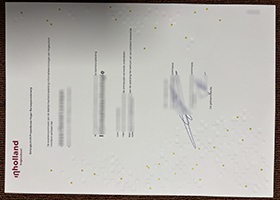
The Dutch Universities of Applied Sciences (Dutch: Hogeschool Inholland ) are an important part of the Dutch higher education system, forming a dual-track system together with research universities (Universiteit). Copy Hogeschool Inholland diploma. These institutions aim to cultivate applied professionals, emphasizing the integration of theory and practice, and serve as crucial talent bases for the Netherlands’ economic and social development and industrial innovation.
I. System Positioning and Historical Development Dutch higher education is divided into two main systems: research universities (U-type) and universities of applied sciences (H-type). The predecessor of the universities of applied sciences can be traced back to the Royal Academy of Fine Arts in The Hague, founded in 1682, but their establishment as an independent educational system began with the Dutch government’s Higher Vocational Education Act of 1986. This act granted universities of applied sciences equal legal status with research universities, marking the formal establishment of the Dutch higher vocational education system.
Around 1986, existing secondary vocational education institutions throughout the Netherlands merged and upgraded, forming the current structure of universities of applied sciences. For example, the Hague University of Applied Sciences was formed in 1987 by the merger of 14 small colleges in The Hague, some of which have histories dating back to the 19th century; Inholland, the Netherlands University of Applied Sciences, was also formed in 1986 by the merger of several specialized colleges.
II. Educational Characteristics and Models The core characteristic of universities of applied sciences lies in their “application-oriented” approach. Unlike research universities, which emphasize theoretical exploration and academic research, universities of applied sciences closely align their curricula with the needs of the labor market, emphasizing the cultivation of students’ practical abilities and problem-solving skills.
In terms of curriculum, universities of applied sciences generally adopt a modular, progressive curriculum structure. Undergraduate studies typically last four years, with a mandatory industry internship in the third or fourth year. Taking the Hague University of Applied Sciences as an example, the university requires all majors to include an industry internship and has established industry-academia collaborations with multinational corporations such as Philips and Shell Oil Company. Some courses are taught directly by industry experts.
In terms of teaching methods, universities of applied sciences widely employ project-based learning, case studies, and simulation training. Many institutions are equipped with simulated teaching environments and industry-standard laboratories, helping students gain real-world professional experience while still in school. The Amsterdam University of Applied Sciences (HvA), in particular, uses the “city as a laboratory” concept as its core, solving practical problems in Amsterdam’s urban development through interdisciplinary collaboration.
Regarding research activities, HvA has dedicated research centers (lectoraten) focusing on real-world issues such as SME development, social services, and regional economics. These studies are typically led by professors with extensive practical experience, and students actively participate, creating a virtuous cycle of mutual learning.
III. Representative Institutions There are approximately 40 government-funded universities of applied sciences in the Netherlands. The following are some representative institutions:
The Amsterdam University of Applied Sciences (HvA) is the largest university of applied sciences in the capital region, with approximately 30,000 students. It comprises seven faculties, including Design and Communication, Economics and Management, and Technology, offering 88 undergraduate and master’s programs covering fields such as international business, information engineering, and physical therapy. HvA maintains a close cooperative relationship with the University of Amsterdam, and there are intentions for a future merger between the two institutions.
The Hague University of Applied Sciences (HHS), founded in 1987, has approximately 20,000 students, about one-third of whom are international students from 135 countries and regions worldwide. Its European Studies program is a flagship discipline, and graduates hold positions in international organizations such as the United Nations and the European Commission.
The Netherlands University of Applied Sciences (Inholland), founded in 1986, has four campuses in Amsterdam, Rotterdam, Delft, and Haarlem, with nearly 40,000 students. It offers over 60 courses covering fields such as hospitality management, applied psychology, engineering, and life sciences.
Zeland University of Applied Sciences (HZ) consistently ranks among the top ten in the Netherlands’ vocational education assessments, with nine out of its 18 programs ranking among the top five in the country. The university offers seven undergraduate programs taught in English, with water management and international logistics being among its strengths.
IV. Quality Assurance and International Accreditation The quality assurance system for Dutch Universities of Applied Sciences is overseen by the Dutch and Flanders Accreditation Agency (NVAO), and all courses undergo regular assessments and accreditations by this agency. Within the Netherlands, *Keuzegids Hbo* is a leading guideline for evaluating the teaching quality of universities of applied sciences, ranking them based on a comprehensive assessment of indicators such as student satisfaction, employment data, and academic success rates.
Regarding degree recognition, bachelor’s degrees awarded by universities of applied sciences are equivalent to those from research universities and are recognized by the Chinese Ministry of Education. This provides strong support for graduates seeking employment or further studies both domestically and internationally.
V. Internationalization In recent years, Dutch universities of applied sciences have accelerated their internationalization process, with an increasing number of institutions offering programs taught entirely in English to attract international students. English-taught undergraduate programs typically require an IELTS score of 6.0 or a TOEFL score of 80 or higher, with an average annual tuition of approximately €8,400, offering high value for money compared to other English-speaking study abroad destinations.
Meanwhile, these institutions are actively expanding their international cooperation networks. Amsterdam University of Applied Sciences has established partnerships with 250 institutions in 50 countries and, as a founding member of the Urban Research and Education Knowledge Alliance (U!REKA), collaborates with six European applied science institutions to promote the development of applied education.